
Arguments Against Small Modular Nuclear Reactors (SMRs)

I. Introduction
The Plymouth Town Election will be held on Saturday, May 16, and one of the policy discussions which has emerged from the campaign is whether SMRs — small modular nuclear reactors — should be brought to the former Pilgrim site. Reasonable people of good will can disagree on this matter. Nevertheless, in this paper, I will argue that the notion of bringing SMRs to the Pilgrim site should be rejected. The existing and unresolved problems from the prior nuclear plant at Pilgrim; the problems with SMRs themselves; and the factually-challenged — and occasionally bad faith — assertions of certain pro-SMR voices all point in one direction: Plymouth, her neighbors, and the Commonwealth should reject the notion of an SMR at Pilgrim.
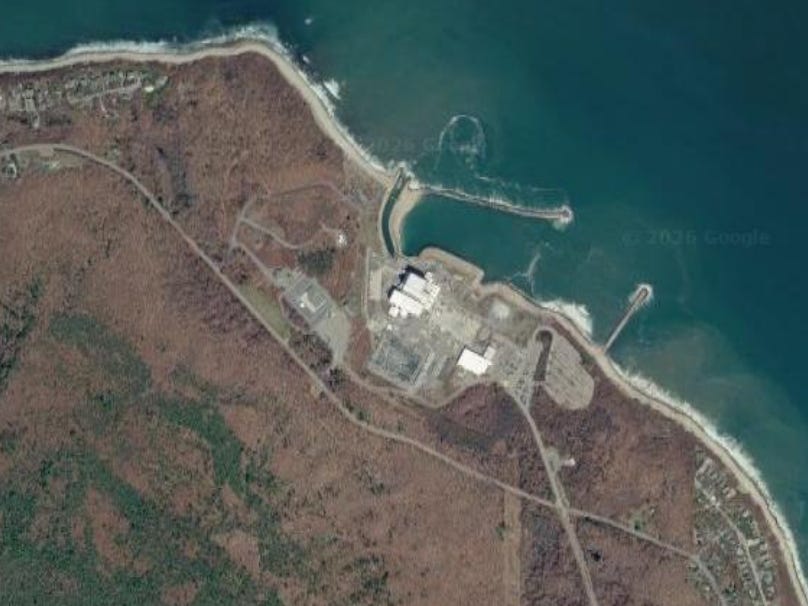
(Aerial view of the Pilgrim site in Plymouth, via Google Maps.)
The SMR question was primarily brought forth by Betty Cavacco and Dick Quintal in their combined campaign for Select Board. I emailed all five candidates — Betty Cavacco, Dick Quintal, Kevin Canty, Scott Vecchi, and Ashley Shaw — for Select Board for their views on the issue; only one of them, Scott Vecchi, got back to me (I understand why folks may not have gotten back to me; it’s a very busy time for candidates, after all).
“My opinion on SMR’s at Pilgrim is that when elected my job will be to represent the will of the citizens of Plymouth. Until there is a solid proposal from Holtec regarding what they want to do and what the impact mitigation for the town will be there is not enough information to proceed and anything right now is pure speculation,” said Mr. Vecchi by email.
“Anything is 10 y[ea]rs out and will not generate any revenue before then,” he continued.
“At the end of the day we need to fix our budget and prepare for the difficult financial times ahead, nuclear power is not a magic panacea that will solve all of Plymouth[']s financial issues and will not generate any revenue for the town in the near future, however down the road it could be beneficial for the town if we do not repeat the mistakes of the past and blow through the revenue like a sailor on shore leave,” said Mr. Vecchi.
Both Ms. Cavacco and Mr. Quintal have expressed support for exploring the idea of SMRs at Pilgrim, including taxing the waste left over at the Pilgrim site.1 Kevin Canty has expressed deep concern with the idea of bringing in SMRs to the Pilgrim site, and has suggested that a town-wide referendum on new nuclear power is appropriate; he also suggested that the Town should join litigation against the federal government with respect to the nuclear waste stranded at Pilgrim.2 I have not been able to find the position on SMRs of the write-in candidate, School Committee member Ashley Shaw.
While it is understandable why Plymoutheans would want to see their tax bills decrease, or increase less severely — all of our towns are faced with the prospect of overrides — it would be unwise to do at the expense of human and environmental health. Moreover, the actual potential growth area in our region is the Blue Economy, worth nearly $2 billion, and encompassing fishing and aquaculture, recreation and tourism, marine transport, and marine science.3 The growth in regional aquaculture alone in this century has been meteoric.4 And as the experience of the Japanese fishing industry has shown, it can be difficult to reconcile both this Blue Economy and the negative externalities of nuclear power production, namely, waste and its effects on global consumer perception.5
II. Existing Problems Left Over from Pilgrim
A number of problems remain at Pilgrim from the operation of the power station between 1972-2019.
Waste
The most immediately concerning is the solid radioactive waste and wastewater left over from operations at Pilgrim, both of which remain onsite.
The high-level radioactive waste is held in 61 casks, visible from Rocky Hill Road, each with between 1/3 to ½ of the cesium-137 released at Chernobyl.6 The low-level radioactively- and chemically-contaminated wastewater has been the subject of litigation [note: I am a party to this litigation] after Holtec sought to discharge it into the protected waters of Cape Cod Bay in violation of Massachusetts statute, with the Massachusetts Department of Environmental Protection (MassDEP) and its administrative law tribunal, the Office of Appeals and Dispute Resolution (OADR), ruling against Holtec, on the grounds that its proposed discharge is in violation of the Massachusetts Ocean Sanctuaries Act.7
When Holtec found its plans for liquid discharge of the wastewater into the Bay stymied, it proceeded, surreptitiously, to evaporate the wastewater directly into the atmosphere. Indeed, we only know about this evaporation because of a whistleblower letter received by my colleague in Save Our Bay MA Diane Turco, of Harwich, the Director of the Cape Cod Downwinders, in the summer of 2023.8
Cancer
Then there are health issues, particularly cancer. It is well established that radiation exposure increases the risk of cancer: the National Academies of Sciences, Engineering, and Medicine found that “At low doses, damage is caused by the passage of single particles that can produce multiple, locally damaged sites leading to DNA double-strand breaks (DSBs).”9 Noted biostatistician Ethel Gilbert concluded in 2009 that “[m]ost solid cancers have been found to be associated with radiation exposure, but risk estimates are most reliable for leukemia, all solid cancers combined, and cancers of the breast and thyroid.”10
Researchers R.W. Clapp and S. Cobb found that in the 1980s, “[t]he temporal relationships of infant mortality, leukemia, thyroid cancer, and other diseases suggest that residents of local communities around and to the north of the power plant are at increased risk of health effects resulting from exposure to ionizing radiation. Leukemia (excluding chronic lymphocytic leukemia), in particular, was approximately 75% more frequent in 1982-1984 in the Plymouth area compared to the rest of the State.”11
Clapp and Cobb’s findings are supported by later data from the Massachusetts Department of Public Health’s Cancer Registry. That data is broken down by a series of five-year (inclusive) data sets between 2000 and 2021 (thus: 2000-2004, 2001-2005, 2002-2006 ... 2015-2019, 2016-2020, 2017-2021). In all but one of those four-year data sets, the incidence of leukemia in Plymouth was either statistically significant or above expected.
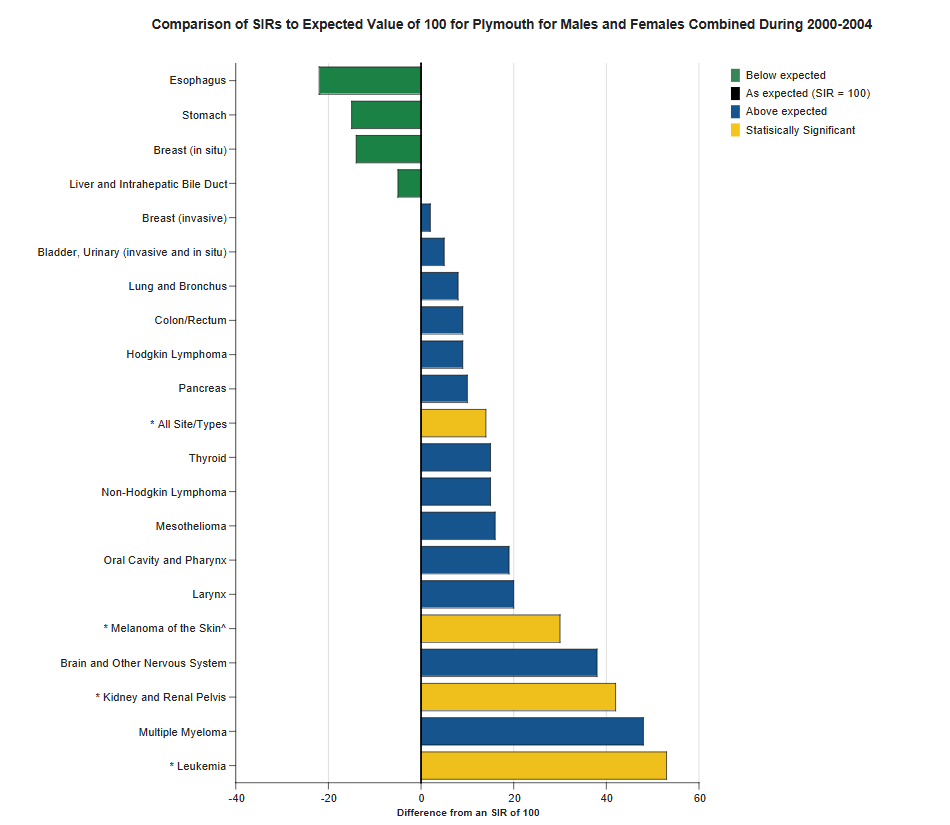
(Plymouth cancer data from 2000-2004 via the Mass. Cancer Registry; SIR means Standardized Incidence Ratio.)
In 2025, Kaltofen et al. found “strong evidence of nuclear fuel and fission-related isotopes (uranium-235, polonium-210, thorium, lead-210, and cesium-137) and limited evidence of neutron activation products (cobalt-60) in samples of indoor dust and soil in the vicinity of the PNPP [Pilgrim Nuclear Power Plant] in Plymouth, Mass. The presence of cesium-137, a nuclear fission product unrelated to naturally occurring radioactive material, suggests that this set of detected isotopes is likely to result from the PNPP’s operations or decommissioning.”12
Earlier this year, Alwadi et al. found that “found that U.S. counties located closer to operational nuclear power plants experienced higher cancer mortality rates, with the strongest associations observed in older adults, particularly among males aged 65–74 and females aged 55–64. These results indicate a spatial association between residential proximity to nuclear power plants and cancer mortality.”13
Locally, significant anecdotal evidence exists of the carcinogenic effects of nuclear plants on the local environment. Theodore Bosen, a former Plymouth resident, reported eating mussels from the vicinity of Pilgrim in the 1980s. Later, in 2006, Mr. Bosen developed thyroid cancer (a result which was predicted to him by physicist Ernest Sternglass). Mr. Bosen also pointed to other deaths from cancer by people who lived in proximity to Pilgrim, including Wedge Bramhall, of Chiltonville.14 These facts, while anecdotal, are consistent with the findings of the Massachusetts Cancer Registry, cited above.
Holtec
Then there is Holtec. The corporation’s record does not exactly inspire confidence.
There is the decommissioning itself, including both the proposal to dump radioactive pollutants into Cape Cod Bay and the outrageously arrogant performance of its CEO, Dr. Krishna Singh, as a witness at the May 2022 Congressional field hearing in Plymouth — at which, as one keen observer later remarked, it became clear that Dr. Singh cared not one iota for the people of Plymouth and her neighboring towns. Indeed, Holtec’s conduct was denounced in that spring of 2022 even by those who currently advocate for a return to nuclear power: I remember well — and agreed, then and now — with then-Selectwoman Cavacco’s statement at the April 9, 2022, Save Our Bay MA rally, with Selectman Quintal at her side, that Holtec was engaged in what she rightly characterized as “corporate aggression.”
The legal actions brought against Holtec across jurisdictions — in Massachusetts, New Jersey,15 and New Mexico16 — also speaks volumes about why many are loath to trust the corporation with the construction of new nuclear power facilities.
III. Problems with SMRs
1. New Technology
Despite repeated misinformation from proponents on certain local social media pages, SMRs are not operating in the United States. Nor are they in operation in Canada or Europe. Rather, the only two SMRs currently in operation are in China and Russia.17 As a result, there simply is no SMR safety record to study in the United States, Canada, Europe, Japan, or other countries with comparable regulatory environments.
Given this limited record, what basis is there for the SMR boosters’ extravagant claims regarding new safety measures?
Proponents of SMRs frequently assert that the fact that these reactors would use passive rather than active safety measures is an argument for their greater safety. But Dr. Edwin Lyman of the Union of Concerned Scientists takes a different view: “the so-called passive safety features that SMR proponents like to cite may not always work, especially during extreme events such as large earthquakes, major flooding, or wildfires that can degrade the environmental conditions under which they are designed to operate. And in some cases, passive features can actually make accidents worse: for example, the NRC’s review of the NuScale design revealed that passive emergency systems could deplete cooling water of boron, which is needed to keep the reactor safely shut down after an accident.”18
Certain pro-nuclear voices further suggest that because General Electric is one of the corporations working on SMRs, that our concerns should be quieted. It is not evident why this should be so. After all, GE was responsible, between 1947-1977, for dumping over a million pounds of toxic PCBs into the Hudson River, creating a 200-mile long superfund site. If anything, the involvement of GE in SMRs, far from allaying fears, should raise significant environmental concerns, given its record.19
2. Economic issues
SMRs and nuclear energy generally are not cost-competitive with renewable sources of energy like wind and solar. According to Dr. Lyman, in 2024 “[t]he levelized cost of electricity for the now-cancelled NuScale project [Editor – the very project that SMR boosters falsely claim is up and running on local social media pages] was estimated at around $119 per megawatt-hour (without federal subsidies), whereas land-based wind and utility-scale solar now cost below $40/MWh.”20
Indeed, one of the ways to make SMRs cheaper than traditional reactors is through decreasing costly safety expenditures. Here is Dr. Lyman of the Union of Concerned Scientists, again: “SMR developers try to reduce capital cost is by reducing or eliminating many of the safety features required for operating reactors that provide multiple layers of protection, such as a robust, reinforced concrete containment structure, motor-driven emergency pumps, and rigorous quality assurance standards for backup safety equipment such as power supplies.”21
Moreover, nuclear energy essentially relies on massive government subsidies, without which it would not be economical.22 Ironically, one of the most prominent advocates of bringing SMRs to Plymouth, with a remarkable lack of consistency, also believes that he is in favor of “limited government.”23 This is a hard circle to square. If one is for nuclear power, one is by definition for an energy source that requires massive state intervention to exist. There is thus a deep contradiction here between support for nuclear energy and professed belief in limited government.
Uranium Mining and Waste
Then there are problems with uranium as a fuel source for nuclear plants. In 2023, according to the World Nuclear Association, only 1% of global uranium supplies were in the United States. The countries with the most uranium in 2023 were Australia (28%), Kazakhstan (14%), Canada (10%), Namibia (8%), and Russia (8%).24 Typically, importing uranium from either Australia or Canada would not be a problem — but these are not typical times, with the current President threatening to annex Canada and publicly insulting the Australian ambassador last year.25 It is entirely within the realm of possibility that these formerly friendly countries will be less and less inclined to sell uranium to U.S. nuclear energy producers. In general, with the system of globalized world trade in the process of breaking down, the American nuclear industry’s reliance on foreign uranium is a problem.
And that is not even to consider the environmental and human health costs of uranium mining. Dr. Phillida Charley, a scientist and member of the Navajo Nation, described the effects of uranium mining on Navajo land: “The miners’ families are still dealing with direct and indirect health effects, such as cancer, diabetes, hypertension, and kidney diseases. More studies need to be done to link the health effects to long-term uranium exposure. We do not know how far that will go. There is uranium and arsenic in the groundwater wells. We can explain to the community that the water is contaminated, but the water is clear, it does not smell, it looks clean, so it is hard to communicate the danger. Some of the houses built with mine rocks are still there and radioactive.”26
Finally, while nuclear plants in operation produce very little carbon, the mining and milling of uranium and the construction of nuclear plants are not carbon neutral activities.27
SMRs: Waste Issues
In addition, there is an SMR-specific wrinkle to the issue of nuclear waste: according to a 2022 paper by Krall et al., SMRs will actually produce more waste by volume, that is more reactive, than the waste produced by existing pressurized water reactors: “Here, we estimate the amount and characterize the nature of SNF [spent nuclear fuel] and LILW [low and intermediate level waste] for three distinct SMR designs.... [W]e find that, compared with existing PWRs [pressurized water reactors], SMRs will increase the volume and complexity of LILW and SNF. This increase of volume and chemical complexity will be an additional burden on waste storage, packaging, and geologic disposal. Also, SMRs offer no apparent benefit in the development of a safety case for a well-functioning geological repository.”28
IV. The Regulatory Picture
The NRC Prior to May 2025
When examining the national regulatory picture, it is necessary to look at the Nuclear Regulatory Commission (NRC). Even prior to President Trump’s May 2025 Executive Order 14300, which makes significant changes to the NRC, the NRC was seen as one of the most industry-friendly federal regulatory authorities in the entire federal government. At Sen. Markey and Rep. Keating’s Congressional Field Hearing in Plymouth in May 20222, Attorney Greg Fettus, an experienced federal environmental litigator, described the NRC as having engaged in “an extraordinary abdication of regulatory oversight” with respect to overseeing the decommissioning of nuclear plants.29
Executive Order 14300
President Trump’s May 2025 Executive Order 14300 undoes even that extremely limited level of regulatory scrutiny at the NRC. The Order, among other things, set an 18-month time limit for licensing new nuclear power plants.30 It also scraps the widely accepted linear no-threshold (LNT) radiation dose-response model, which holds that even low levels of radiation exposure can produce cancerous results, and is widely used by international regulatory authorities.31 The order also subjects the NRC to DOGE-supervised personnel cuts, reducing the labor power available to the NRC to regulate the nation’s nuclear industry.32 It also attempts to loosen the requirements of the National Environmental Policy Act with respect to nuclear energy (NEPA requires that federal entities evaluate the environmental impacts of their actions).33
Given all that we know, are we really prepared to trust the Trump Administration with the deadly serious endeavor of regulating the nuclear industry? I certainly am not.
3. The Evolution of Healey’s Position on Nuclear Energy
Because authority over nuclear power in our federal system is divided between the federal and the several state governments, state laws and regulations remain highly relevant. Massachusetts Governor Maura Healey, for her part, appears to have made a definitive turn to a pro-nuclear position. For those who have observed Healey over the decades, it is not entirely surprising — as Attorney General, she drew the ire of environmental groups for her willingness to settle with a pipeline company that sought to use eminent domain to seize part of a state forest in the Berkshires for a pipeline.34
Thus, seasoned observers may not be entirely surprised by Healey’s Executive Order No. 654, which states, in part, that “in addition to promoting wind and solar generation, Massachusetts has the opportunity to leverage relatively untapped energy resources, including geothermal and other non-fossil thermal energy solutions, advanced nuclear fission and fusion energy technologies, hydroelectric power, and other resources.”35
Yet Healey’s shift does appear to stand in some tension with her prior statements, at least respecting the wastewater at Pilgrim. In June 2022, while campaigning on the Cape, then-Attorney General Healey told WCAI’s Jennette Barnes that “We’ve come a long way on this issue, and I’ll be damn sure, in whatever capacity I serve, that we’re not going to have radioactive waste dumped down here[.]”36
In addition, the Governor has supported amending the Commonwealth’s laws to get rid of the requirement, passed in 1982, that a statewide referendum take place before the construction of any new nuclear plants.37
The simplest explanation for the Governor’s evolution on this issue is two-fold: first, in the absence of a viable opposition party in Massachusetts, the temptation for Democrats to become the party of big business is all too real. And second, we should not be surprised to find a politician up for reelection in a state beset by high energy costs38 taking any and all measures she can to convince the public she is doing something — no matter how unwise in the long-term — to deal with that problem.
V. The Problems of Epistemology: Factually-Challenged AI Slop and Bad Faith Argumentation
At a very basic level, many of the problems in the debate over SMRs are problems of epistemology — of how we know things. In general, social media is a bad place for serious discussion of any issue, and SMRs are no different. Indeed, the credibility of the SMR boosters’39 claims is seriously undermined by a number of these epistemological factors, including the factually inaccurate — frequently AI-generated — social media posts they put forth into the discourse40, and the use of transparently bad-faith arguments which contradict their own statements elsewhere.41 These issues are described in the footnotes below.
VI. Continuing the Mistakes of the Past
At a higher level, the problem with the argument that we should return to nuclear power is that it ignores the lessons we have learned — especially in the 20th century — of the dangers to our ecosystems and human well-being of an economic model premised on endless growth, endless extraction of natural resources, and endlessly increasing energy inputs. Such a model, as Russian novelist and Soviet-era dissident Alexander Solzhenitsyn put it, ultimately ends up with us “poisoning ourselves” “in an economic race”. Rather, as Solzhenitsyn put it, “[t]he time is urgently upon us to limit our wants. It is difficult to bring ourselves to sacrifice and self-denial, because in political, public and private life we have long since dropped the golden key of self-restraint to the ocean floor. But self-limitation is the fundamental and wisest step of a man who has obtained his freedom.”42
To put it more directly — it is not a law of nature that we need to endlessly consume more energy. It is not a law of nature that we must allow the creation of massive AI data centers so social media commenters can avoid having to do any of their own thinking while they while away their days creating AI slop. Humans are imbued with free will, and we are free to choose not to do these things — precisely to limit our wants on a finite planet.
And if we fail to do so, Solzhenitsyn’s warning still rings true: “And yet, if we do not learn to limit firmly our desires and demands, to subordinate our interests to moral criteria, we, humankind, will simply be torn apart, as the worst aspects of human nature bare their teeth.”43
For all of these reasons, I believe we should reject SMRs, both here in Massachusetts, and beyond.
Fred Thys, “Four candidates for two open seats on Select Board”, The Plymouth Independent, May 11, 2026. https://www.plymouthindependent.org/four-candidates-for-two-open-seats-on-select-board/.
WATD Plymouth Select Board Candidates’ Forum, April 23, 2026, https://959watd.com/blog/2026/04/plymouth-select-board-political-forum/.
Leslie-Ann McGee et al., Cape Cod Blue Economy Project A Call to Action, 11. BLS inflation tool available here: https://www.bls.gov/data/inflation_calculator.htm. The Blue Economy of the Cape Cod Bay region was worth about $1.4 billion in 2016 dollars, which equals about $1.94 billion in 2026 dollars.
See Duxbury Water Quality, “Aquaculture, Commercial, and Recreational Shellfish Activity in Duxbury,” https://duxburywaterquality.org/aquaculture/.
Mari Yamiguchi, The Associated Press, “China bans seafood from Japan after Fukushima nuclear plant begins releasing wastewater,” The Los Angeles Times, August 24, 2023; https://www.latimes.com/world-nation/story/2023-08-24/china-bans-japan-seafood-fukushima-nuclear-plant-wastewater.
Mary and James Lampert, Pilgrim Nuclear Power Station Decommissioning – June 1, 2019 – Forward, updated February 2025, 60, 37.
See OADR, Recommended Final Decision, In the Matter of Holtec Decommissioning International, LLC, November 6th, 2025.
Ben Cronin, “‘A Gross Breach of Trust’ — Whistleblower Alleges Surreptitious Evaporation of ‘Contaminated Water’ at Pilgrim”, The Plymouth County Observer, August 22, 2023.
National Academies of Sciences, Engineering, and Medicine. 2006. Health Risks from Exposure to Low Levels of Ionizing Radiation: BEIR VII Phase 2. Washington, DC: The National Academies Press. https://doi.org/10.17226/11340, 313.
Ethel S. Gilbert, “Ionizing Radiation and Cancer Risks: What Have We Learned From Epidemiology?”, Int J Radiat Biol. 2009 Jun; 85(6): 467–482. doi: 10.1080/09553000902883836.
Clapp, R. W., & Cobb, S. (1990). Leukemia and other health outcomes in the vicinity of the Pilgrim Nuclear Power Station, Plymouth, MA. Archives of Environmental Health, 45(5), 317.
Kaltofen M, Zilli Vieira CL, Garshick E, Koutrakis P. Soil and Indoor Radionuclides Related to the Plymouth Pilgrim Nuclear Power Plant Area. Environmental Engineering Science. 2025;42(11):488-497, 493-4, doi:10.1177/15579018251371131.
Alwadi, Y., Alahmad, B., Vieira, C.L.Z. et al. National analysis of cancer mortality and proximity to nuclear power plants in the United States. Nat Commun 17, 1560 (2026). https://doi.org/10.1038/s41467-026-69285-4.
Theodore Bosen, “Pulling (radioactive) mussels from a shell?” Beyond Nuclear, May 8, 2022. https://beyondnuclearinternational.org/2022/05/08/pulling-mussels-from-a-shell/.
Ben Cronin, “‘A Long Train of Abuses and Usurpations’: Examining Holtec’s Public Conduct in Massachusetts, New Jersey, and Beyond”, The Plymouth County Observer, March 25, 2024.
NM AGO Press Release, “Attorney General Balderas Announces Lawsuit to Halt Holtec Nuclear Storage Facility,” March 29, 2021, https://www.law.nyu.edu/sites/default/files/nm-ag-press-release-nrc-holtec-lawsuit.pdf.
https://world-nuclear.org/information-library/nuclear-power-reactors/small-modular-reactors/small-modular-reactor-smr-global-tracker.
Edwin Lyman, “Five Things the ‘Nuclear Bros’ Don’t Want You to Know About Small Modular Reactors,” April 30, 2024, https://blog.ucs.org/edwin-lyman/five-things-the-nuclear-bros-dont-want-you-to-know-about-small-modular-reactors/.
See NOAA on GE and the Hudson River, here: https://darrp.noaa.gov/hazardous-waste/hudson-river.
Edwin Lyman, “Five Things the ‘Nuclear Bros’ Don’t Want You to Know About Small Modular Reactors,” April 30, 2024, https://blog.ucs.org/edwin-lyman/five-things-the-nuclear-bros-dont-want-you-to-know-about-small-modular-reactors/.
Id.
The Office of Nuclear Energy, “8 Big Wins for Nuclear in the Trump Administration’s First Year,” January 26, 2026, https://www.energy.gov/ne/articles/8-big-wins-nuclear-trump-administrations-first-year; Taxpayers for Common Sense, “Understanding Nuclear Subsidies – In Brief,” February 2021, https://www.taxpayer.net/wp content/uploads/2021/03/Nuclear-Report-Summary-Fact-Sheet.pdf; Union of Concerned Scientists, “NUCLEAR POWER: Still Not Viable without Subsidies,” February, 2011, https://www.ucs.org/sites/default/files/2019 09/nuclear_subsidies_summary.pdf.
Al DiNardo, “YOUR VIEW: For a return to ‘limited government’”, The Plymouth Independent, April 24, 2026, https://www.plymouthindependent.org/your-view-for-a-return-to-limited-government/.
https://world-nuclear.org/information-library/nuclear-fuel-cycle/uranium-resources/supply-of-uranium.
Callum Sutherland, “Does Trump Still Plan to Annex Canada and Make It the 51st State? Here’s What to Know,” Time, June 29, 2025, https://www.law.nyu.edu/sites/default/files/nm-ag-press-release-nrc-holtec-lawsuit.pdf; Josh Butler, “‘I don’t like you either’: diplomats hold their breath as Trump chides Rudd over previous comments,” The Guardian, October 21, 2025. https://www.theguardian.com/australia-news/2025/oct/21/i-dont-like-you-either-diplomats-hold-their-breath-as-trump-chides-rudd-over-previous-comments.
Phillida A. Charley, “Walking in Beauty: A Navajo Scientist Confronts the Legacy of Uranium Mining.” https://cvmbs.source.colostate.edu/walking-in-beauty-a-navajo-scientist-confronts-the-legacy-of-uranium-mining-impact/.
Bojie Liu et al., “Would widespread adoption of third-generation nuclear power HPR1000 enhance the mitigation of net greenhouse gas emissions?” iScience, 2025; 28. PIIS258900422500183X.pdf.
L.M. Krall, A.M. Macfarlane, & R.C. Ewing, Nuclear waste from small modular reactors, Proc. Natl. Acad. Sci. U.S.A. 119 (23) e2111833119, https://doi.org/10.1073/pnas.2111833119 (2022). Pressurized Water Reactors can be found at Millstone 2 and 3 in Connecticut, and Seabrook 1 in New Hampshire; Pilgrim was a Boiling Water Reactor (BWR). See https://world-nuclear.org/nuclear-reactor-database/summary/United%20States%20Of%20America.
Testimony of Greg Fettus at the Field Hearing before the Subcommittee on Clean Air, Climate, and Nuclear Safety of the Committee on Environment and Public Works of the United States Senate, May 6, 2022, 171. https://www.congress.gov/117/chrg/CHRG-117shrg48424/CHRG-117shrg48424.pdf.
Executive Order 14300 Sec. 5(a).
Executive Order 14300, Sec. 5(b). On LNT, see, e.g., The Canadian Nuclear Safety Commission, here: https://www.cnsc-ccsn.gc.ca/eng/resources/health/linear-non-threshold-model/. See also the International Commission on Radiological Protection, here: https://www.icrp.org/publication.asp?id=ICRP%20Publication%2099.
Executive Order 14300, Sec. 4.
Executive Order 14300, Sec. 5(c).
Sam Hudzik, “Massachusetts Settles Dispute With Kinder Morgan Over Pipeline Proposal,” Connecticut Public Radio, December 30, 2016. https://www.ctpublic.org/environment/2016-12-30/massachusetts-settles-dispute-with-kinder-morgan-over-pipeline-proposal.
Governor Maura Healey, Executive Order No. 654. https://www.mass.gov/executive-orders/no-654-to-secure-massachusetts-energy-future-by-establishing-an-energy-supply-plan-that-drives-affordability-and-reliability.
Jennette Barnes, “Healey pledges to block Pilgrim from releasing radioactive water,” WCAI, June 14, 2022, https://www.capeandislands.org/local-news/2022-06-14/healey-pledges-to-block-pilgrim-from-releasing-radioactive-water.
Colin Young, State House News Service, “Healey sets stage for reintroducing nuclear power in Massachusetts,” published in The Worcester Telegram and Gazette, May 13, 2025, https://www.telegram.com/story/news/politics/2025/05/13/gov-maura-healey-massachusetts-nucelar-restoration/83607693007/.
One pro-nuclear commentator suggests that it is nuclear energy that causes Florida to have lower energy costs than Massachusetts; yet U.S. Energy Information Agency shows that the rate of nuclear energy use in Florida has remained relatively flat, at around 13%, between 2002 and 2022; it is the vast expansion in natural gas in the first decades of this century in Florida that has made for lower energy rates. See https://www.eia.gov/todayinenergy/detail.php?id=60221.
Indeed, in 2025, Massachusetts, connected with the larger New England grid, relied on nuclear for 23% of its energy — significantly more than Florida. https://www.iso-ne.com/about/key-stats/resource-mix/. If the nuclear boosters’ arguments were correct, we should expect to see the state with more nuclear energy as a proportion of its total energy mosaic to have lower, not higher energy prices — but we do not.
One of the most fervent advocates for bringing nuclear energy back to Plymouth is Precinct 17 Town Meeting Member Al DiNardo. Mr. DiNardo, who lives a significant amount of the year in Florida and frequently relies on AI to compose his written communications, takes exception to the fact that I question his significant yearly sojourn in Florida while he advocates for nuclear power to return to Plymouth. But it is an entirely reasonable question — after all, when an individual loudly advocates for bringing more carcinogens to a community, it is only fair that he should participate fully in the real risks posed by the addition of those carcinogens, rather than escape them for a significant portion of the year. Mr. DiNardo has been agitating for months to bring SMRs to the Pilgrim site, largely through social media. His most pressing concern appears to be the role nuclear power could play in preventing dramatic increases in Plymouth’s property tax rate, and avoiding a Proposition 2 ½ budget override.
“As a Town Meeting Member, my priority is the taxpayer. Plymouth faces a long-term fiscal crisis. Small Modular Reactors (SMRs) offer a multi-billion dollar private investment that could provide the tax revenue needed to fund our schools and services without hitting residents with more overrides,” Mr. DiNardo said via email.
“We can argue about 1980s-era fears, or we can look at the 2026 energy plan signed by our own Governor and the proven track record of states like Florida. I choose to look forward,” he said.
Let us therefore look at Florida’s record — there is significant evidence of radiologically-linked cancers in Florida: nuclear plants at “Turkey Point and St. Lucie have reported the emission of substantial amounts (10.3 Curies, equal to 10.3 trillion picoCuries) of radioactivity into the air from 1970-87, in the form of ‘Iodine and Particulates’ that include Sr-90. About two-thirds of this total (6.69 trillion) is from Turkey Point.... These totals do not include rapidly decaying radioactive chemicals (half-life of under eight days) or unmonitored releases from steam generator corrosion.
By comparison, the Three Mile Island accident in March 1979 released 14.20 trillion picoCuries of Iodine-131 _and particulates into the atmosphere. Thus, reported releases from the four southeast Florida reactors are about three-fourths of that during the Three Mile Island accident.” Sternglass et al., “Environmental Radiation from Nuclear Reactors and Childhood Cancer in Southeast Florida”, April 9, 2003, 15. https://www.nrc.gov/docs/ML0312/ML031220070.pdf.
This has implications for human health, according to Sternglass et al., with both breast cancer and childhood cancers showing increases near Florida nuclear plants: “Regarding southeast Florida, from the early 1950s to the late 1980s, age-adjusted breast cancer mortality near Turkey Point (Broward, Collier, Dade, Monroe, and Palm Beach counties) rose 26%, while the rise near St. Lucie (Brevard, Indian River, Okeechobee, Osceola, and St. Lucie counties) was 55%. The U.S. average increased only 1% in this period.” Id. at 20.
And:
“In St. Lucie County, cancer incidence under age 10 rose 325.3% from the early 1980s to the late 1990s. The 1996-98 St. Lucie rate of 40.79 cancer cases per 100,000 population (30 cases) is more than double the U.S. figure of 15.6.” Id. at 21.
On April 11, 2026, Mr. DiNardo shared a post to his Plymouth Voters and Friends Facebook Page from sweetie Market (lack of capitalization in original), a Facebook digital creator which describes itself as “Daily Science & Innovation — Sourcing the best of science media with the power of AI.” See Al DiNardo, “Plymouth, MA town meeting rejects new nuclear resolution” (Title created by AI from Meta), FACEBOOK, April 11, 2026, 11:37 a.m.; https://www.facebook.com/groups/282927610594002/posts/1277308857822534.
The original April 10 post from sweetie Market stated that “The United States just activated its first commercial small modular nuclear reactor — a compact nuclear power station in Pocatello Idaho that generates clean baseload electricity for 400,000 American homes from a facility small enough to fit on a city block.” sweetie Market, “The United States just activated its first commercial small modular nuclear reactor,” FACEBOOK, April 10, 2026, 10:30 pm. https://www.facebook.com/permalink.php?story_fbid=pfbid0Y2g4qEJA2heEmEd92GpM116r2SBhSxZPrjKTZK47asySJUsQxfVJUkvACf9n4GVml&id=61566914035025.
The problem is that this is simply not true – as commenter Richard Collins noted to Mr. DiNardo, the NuScale project, rather than having been activated, was actually cancelled in 2023 because it was economically unviable. See Rahul Rao, “First U.S. Commercial Small Nuclear Reactor Axed,” IEEE Spectrum, November 14, 2023, https://spectrum.ieee.org/small-modular-reactors-nuscale. (The citation is originally Mr. Collins’s).
Nevertheless, on April 24, 2026, JR Frey posted the same post verbatim on Plymouth Voters and Friends, only this time coming from a Facebook digital creator named Science World. See JR Frey, “FYI”, FACEBOOK, April 24, 2026, 8:31 pm, https://www.facebook.com/groups/282927610594002/posts/1287689700117783/?comment_id=1287761623443924. Science World, like sweetie Market, appears to routinely share things that are simply false (e.g., that Saudi Arabia has created a new city run entirely on solar, which is not correct — see Science World, “Saudi Arabia just opened NEOM’s Leyja district,” FACEBOOK, May 10, 2026, 6:30 pm, https://www.facebook.com/scienceworldd/posts/pfbid0jLorirk7fyeAw5me5525JkXc1w7vPSjAHEoAUjcPb1PyrDyidqzY5vPzGfXD79tpl.)
Saudia Arabia has not in fact opened this district. See Alex Croft, The Independent, “Neom nightmare: How Mohammed bin Salman’s dream of a ‘city of the future’ became a $500bn disaster,” January 31, 2026, https://www.independent.co.uk/news/world/middle-east/saudi-arabia-neom-the-line-mohammed-bin-salman-b2908541.html.
Despite having been advised by Mr. Collins 13 days before that the central claim of the two verbatim posts was simply false, Mr. DiNardo offered no correction, commenting only: “No not Plymouth. This weekend/day trip economy will save us from the long-term fiscal crisis.” Al DiNardo, Comment on Frey, supra, April 24, 2026, 10:17 pm, https://www.facebook.com/groups/282927610594002/posts/1287689700117783?comment_id=1287761623443924.
This level of repeated factual inaccuracy on a matter of major public import is disquieting. It suggests a fundamental lack of concern with what is actually true (as opposed to the dopamine thrill certain social media users experience when they share fact-free, AI-composed slop, no matter its polluting effect on the discourse). This is particularly troubling when the subject of these AI-addled posts is as weighty as nuclear power.
Mr. DiNardo wrote in a letter last month to the editor of The Plymouth Independent “that a stable, carbon-free power grid is impossible without nuclear power”; see Al DiNardo, “YOUR VIEW: In support of nuclear power, tax relief”, The Plymouth Independent, April 1, 2026, https://www.plymouthindependent.org/your-view-in-support-of-nuclear-power-tax-relief/. He has also asserted that “[b]uilding a single 80 MW Small Modular Reactor (SMR) costs approximately $1 billion and can provide 24/7 carbon-free electricity to 80,000 homes.” See Al DiNardo, “Building a single 80 MW Small Modular Reactor,” FACEBOOK, January 16, 2026, 11:39 am, https://www.facebook.com/groups/282927610594002/posts/1209502944603126/. (It is not clear what the basis of this claim is).
The argument that carbon-free electricity generation is desirable is only intelligible in light of the fact that carbon dioxide is one of the chief greenhouse gases driving anthropogenic climate change. Extolling carbon-free electricity generation is therefore to argue from the premise of both the reality and the threat of anthropogenic climate change. Put another way, advocating for carbon-free energy generation only makes sense if one accepts that carbon dioxide emissions are a key driver of anthropogenic climate change, and that they should be reduced.
Yet on his personal Facebook page, Mr. DiNardo frequently derides the notion of anthropogenic climate change. See Al DiNardo, “The climate changed again”, May 24, 2025, 6:36 am, https://www.facebook.com/al.dinardo.2025/posts/pfbid02DAAntsSgUfNhNZ4gybdEDZqqwhrhj9ceYS1trZmswvRnziu547qKN3kPff21oT9Sl; Al DiNardo, “The climate changed again!”, September 8, 2025, 7:52 pm, https://www.facebook.com/al.dinardo.2025/posts/pfbid02TCYpUAW5KyrmhZtFFNjY9sBJZiNsT5e5sDKHpf24u83kamkZiwnf625AfcEjn4wcl; Al DiNardo, “The climate changed again.”, October 28, 2025, https://www.facebook.com/al.dinardo.2025/posts/pfbid02p2XEEK8Mz3fHy1ZnFVyTnHj673Xi7yRLdenXypJo8Mk8SaW3sNM6jWrtZizZRGuel.
This leaves me confused: does Mr. DiNardo believe that anthropogenic climate change is a real threat which can be combatted using nuclear power? Or does he actually view it as fundamentally unreal and as no danger at all, as his continual statements on his personal Facebook page would seem to indicate? It cannot be both.
Alexander Solzhenitsyn, “To Tame Savage Capitalism”, The New York Times, November 28, 1993.
Id.